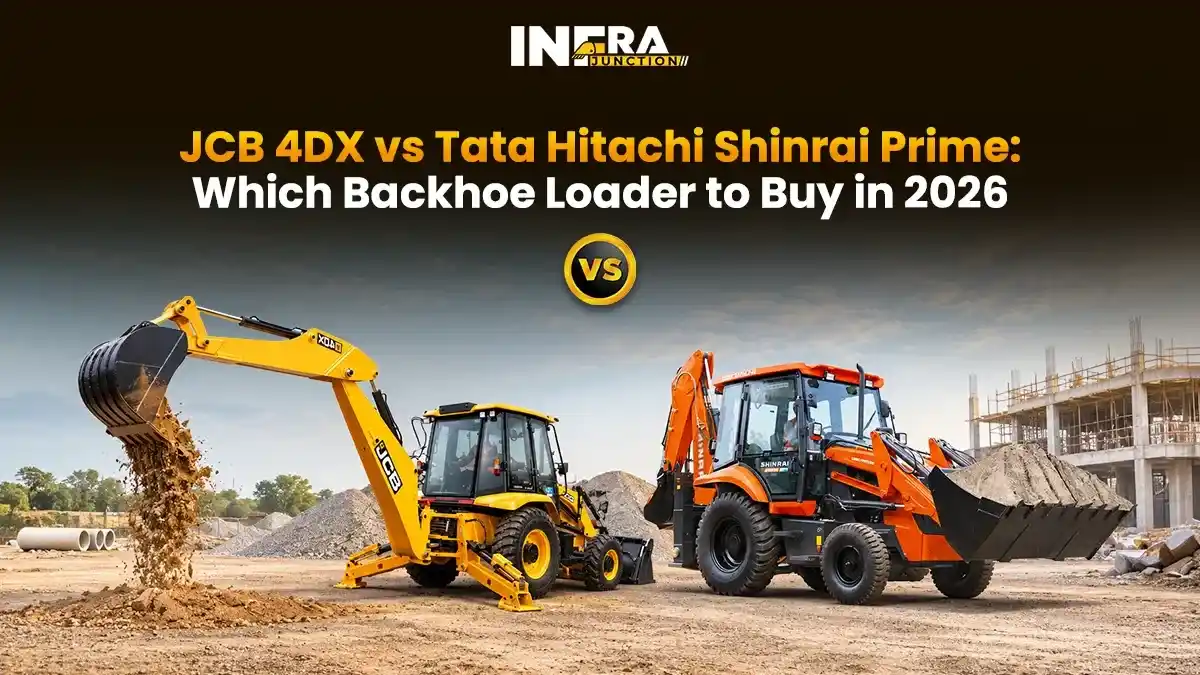
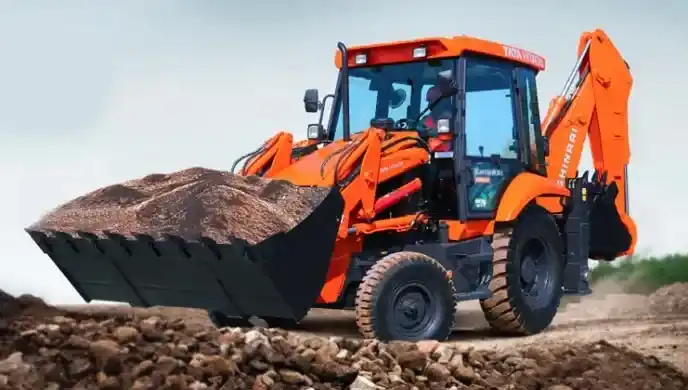
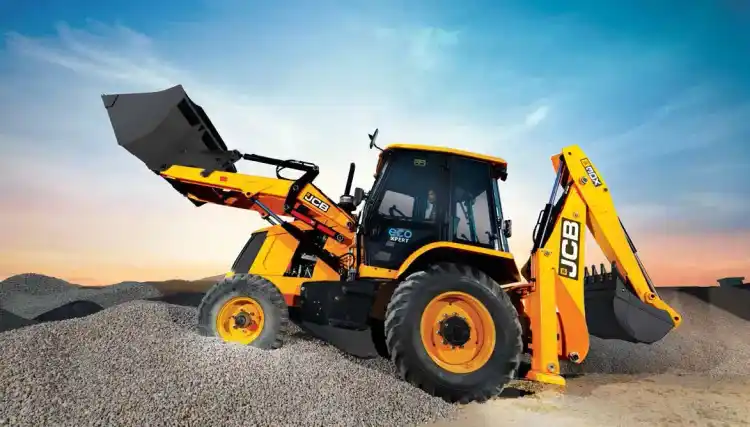
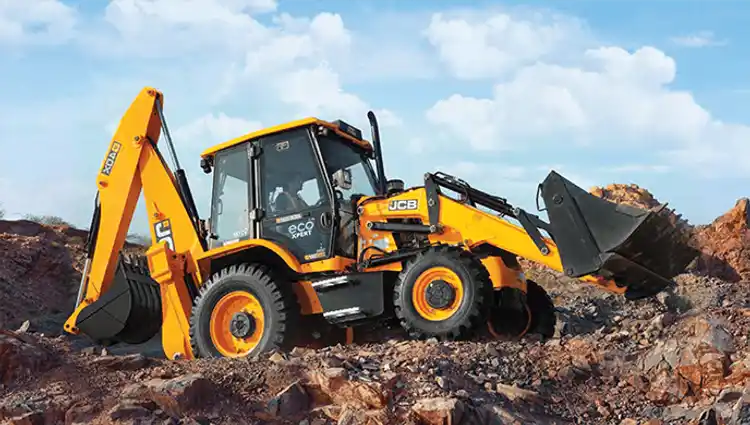
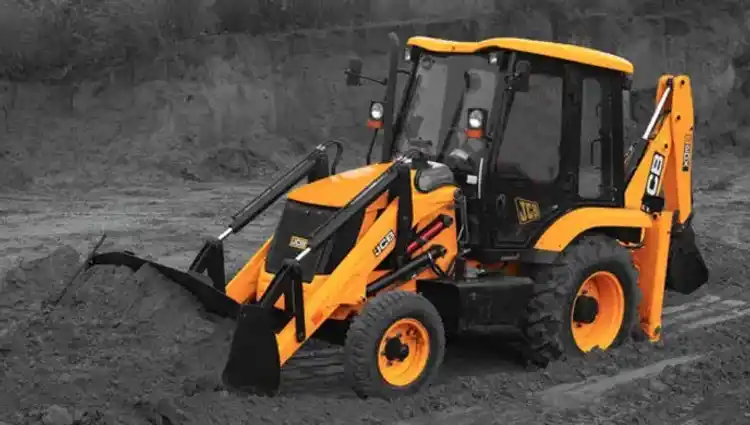
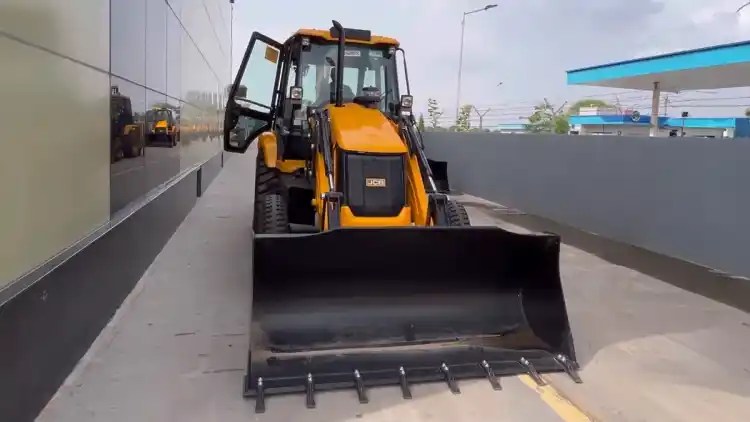
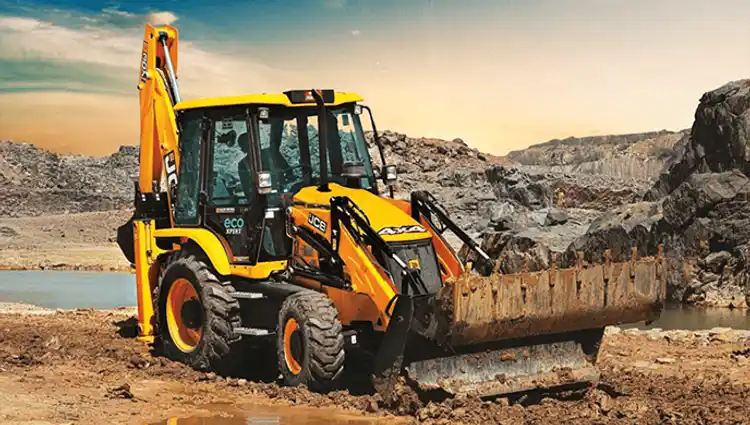
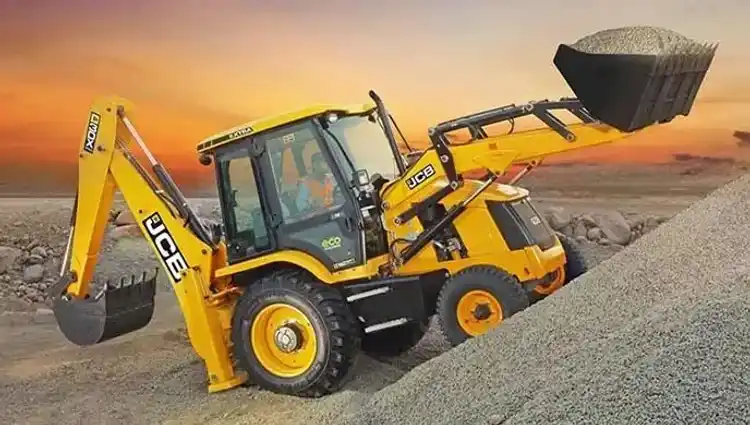
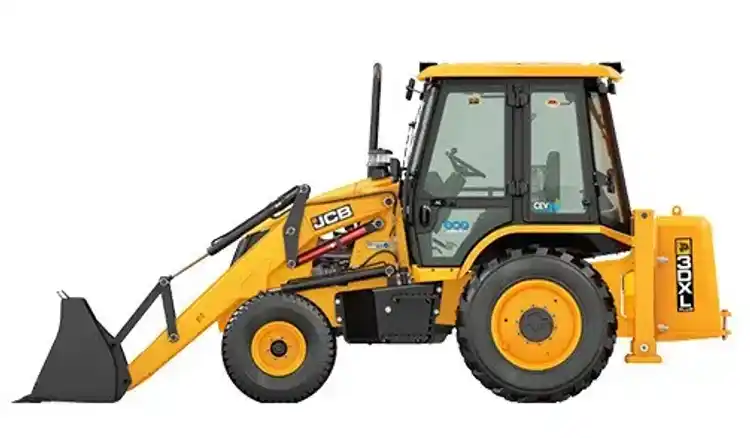
If you are planning to buy a 74 HP backhoe loader, JCB 4DX and Tata Hitachi Shinrai Prime are two popular models. Both backhoe loaders come with CEV Stage 5 engines and can be used for trenching, excavation, and hauling. However, their prices are very different.
You can get JCB 4DX in the price range of Rs 35 lakh to 40 lakh. Tata Hitachi Shinrai Prime is comparatively cheaper with a price ranging between Rs. 33 to 35 Lakh. So you might question why you should pay a higher price for the same engine power. Or can the Tata Hitachi Shinrai Prime handle heavy tasks even with lower price?
To answer these questions, this blog will compare JCB 4DX and Tata Hitachi Shinrai Prime to help you buy the best backhoe loader.
JCB 4DX vs Tata Hitachi Shinrai Prime Full Comparison
Below, we will compare JCB 4DX and Tata Hitachi Shinrai Prime based on price, engine power, operating weight and other factors:
Price Comparison
Model
Price
JCB 4DX
Rs. 36–40 lakh
Tata Hitachi Shinrai Prime
Rs. 33–35 lakh
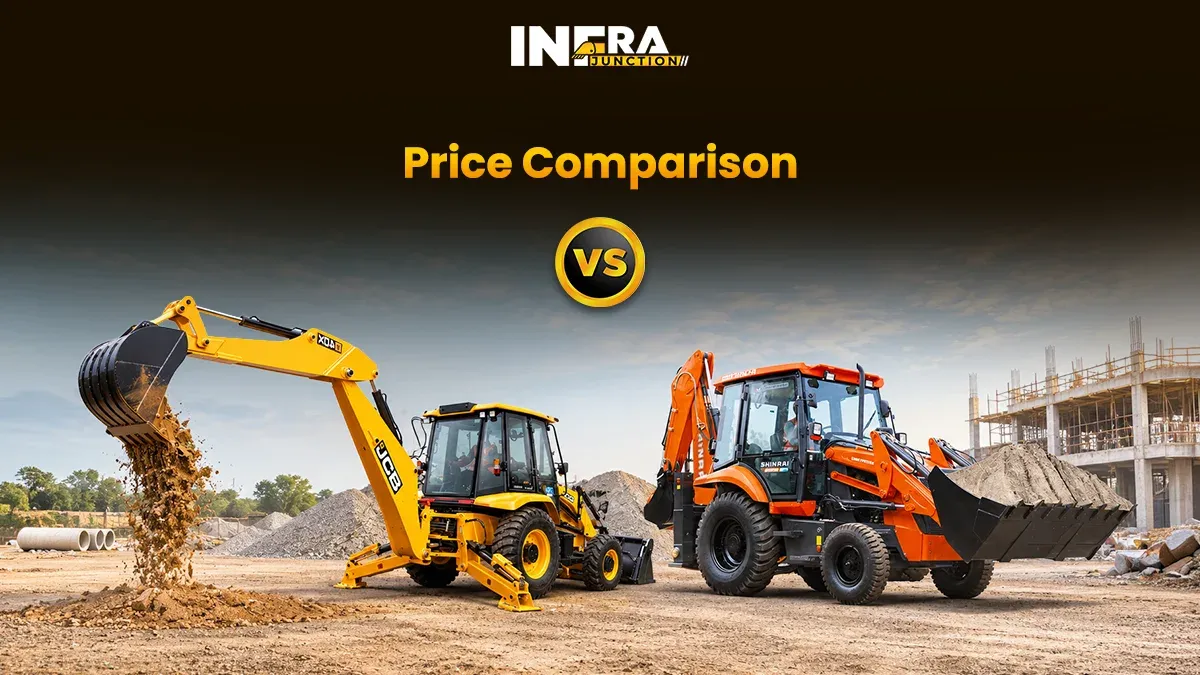
Tata Hitachi Shinrai Prime starts at around ₹33 lakh, making it the lower-cost option compared with the JCB 4DX, which ranges from ₹36–40 lakh.
That extra money makes more sense for contractors who regularly dig deep trenches or foundations. The JCB can reach deeper and has more working height at its upper end. If those jobs come up often, its extra reach can reduce the need to reposition the machine or finish the trench in stages.
For contractors mainly doing routine excavation, roadside drains and truck loading, Shinrai Prime keeps the initial cost lower. Its digging depth and loader height are close enough for many of these jobs.
Engine Power and Torque
Specification
JCB 4DX
Shinrai Prime
Gross Engine Power
74 HP
74.3 HP
Maximum Torque
440 Nm
310 Nm
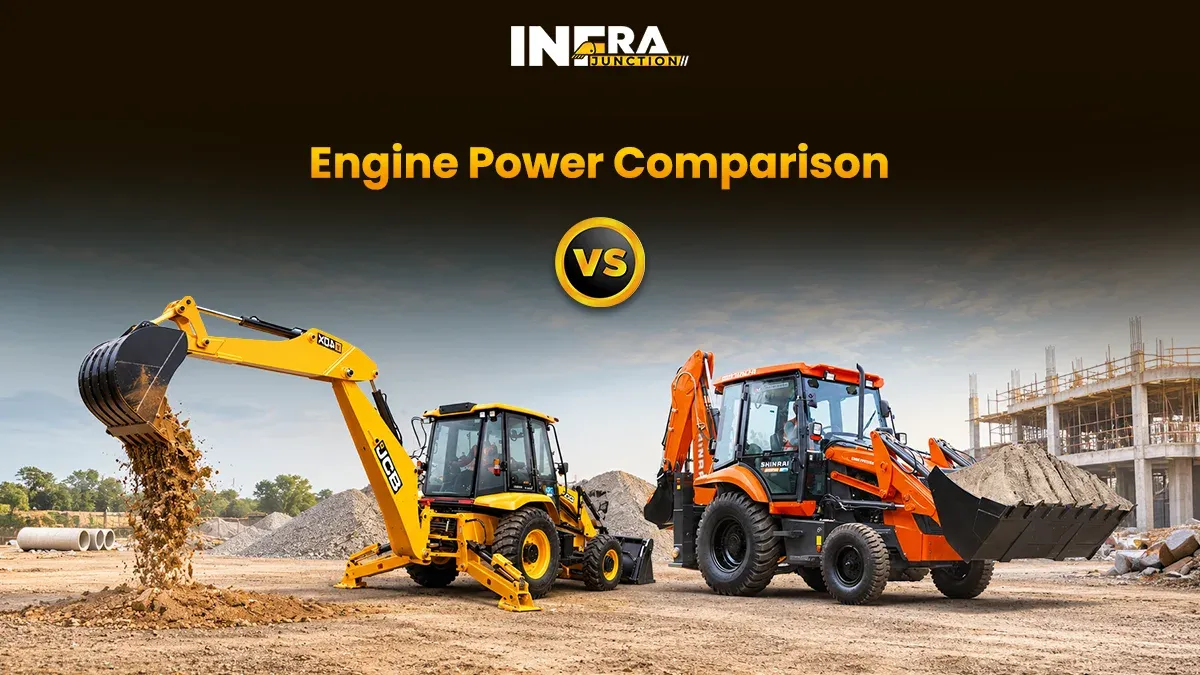
Both JCB 4DX and Tata Hitachi Shinrai Prime deliver around 74 HP. However, 4DX backhoe loader delivers 440 Nm of torque, compared with 310 Nm in Shinrai Prime.
JCB model produces 130 Nm more torque, which gives it stronger torque when digging into tightly packed soil or pulling a full bucket out of a deep trench. Its peak torque also comes at a lower engine speed.
Shinrai Prime produces 74.3 HP, just 0.3 HP more than the JCB. This means both machines have nearly equal engine power for loading loose soil into trucks, digging building foundations and excavating drainage trenches.
Loader and Backhoe Bucket Capacity
Bucket
JCB 4DX
Shinrai Prime
Front Loader
1.2 cum
1.0 - 1.1 cum
Rear Backhoe
0.32–0.40 cum
0.09 - 0.35 cum
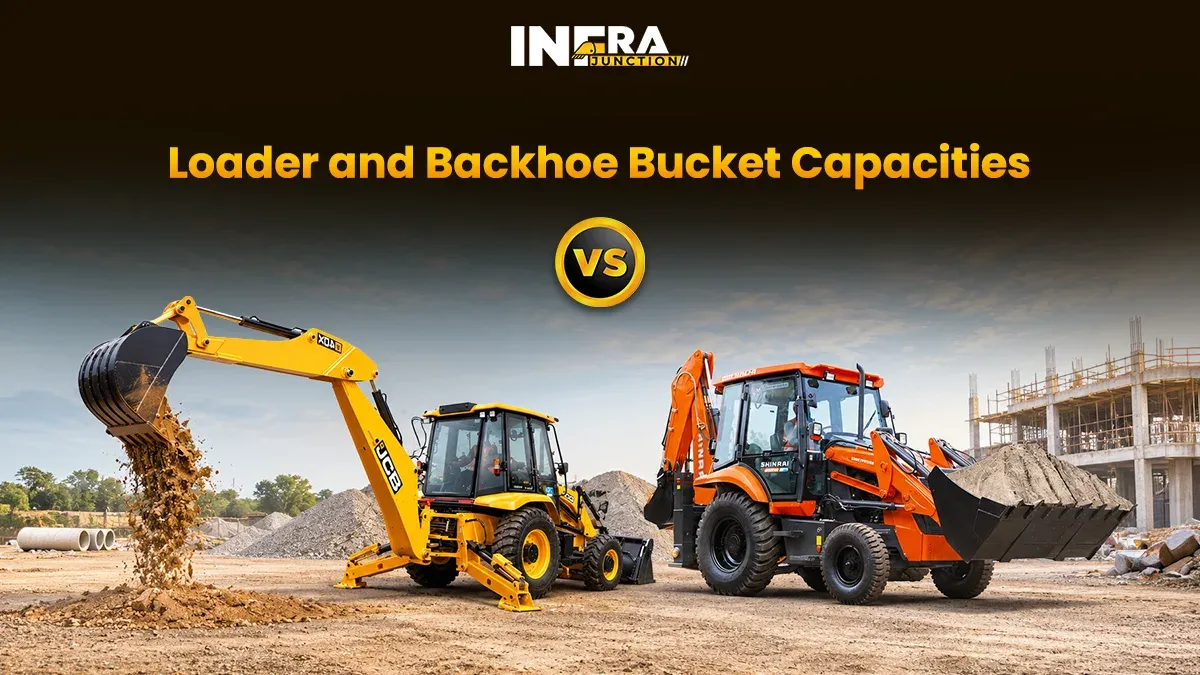
Shinrai Prime offers two loader bucket capacities. Still, when it comes to bucket capacity, JCB 4DX gives it an advantage in both loading and excavation. Its front loader carries around 9% more material per full bucket. For a 10 cum truckload, the JCB needs about 9 full buckets while Shinrai Prime needs around 10.
JCB backhoe loader also has a bigger backhoe bucket capacity, which is 0.40 cum. However, Shinrai Prime offers 6 bucket options for different excavation tasks, including:
Standard Bucket: 0.27 cum
Heavy-Duty Bucket: 0.22 cum
Trench Bucket: 0.18 cum
Trench Bucket: 0.12 cum
Trench Bucket: 0.09 cum
Ditch Cleaning Bucket: 0.35 cum
Operating Weight
Model
Operating weight
JCB 4DX
Around 8450 kg
Shinrai Prime standard
8120 kg
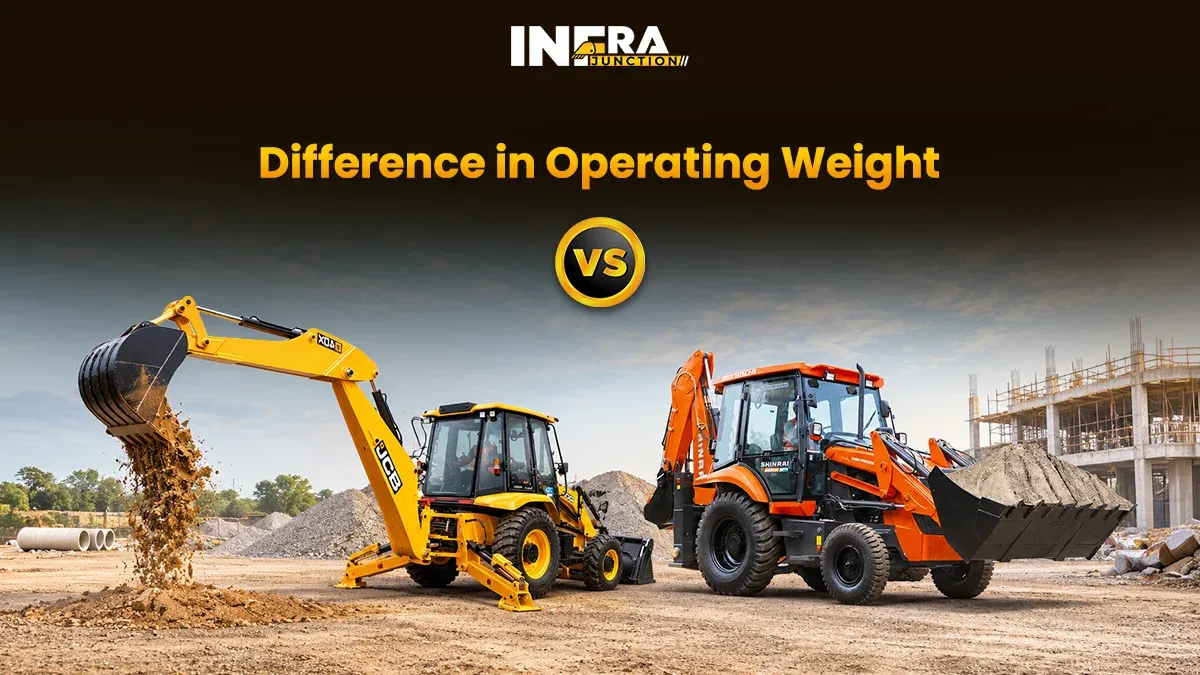
JCB 4DX operating weight is around 8,450 kg while Tata Hitachi Shinrai Prime weighs 8120 kg.
JCB's extra weight keeps more pressure on the machine when the rear bucket digs into hard, packed soil. This can make it steadier while digging deep trenches or pulling out a full bucket of soil.
The Tata Hitachi backhoe loader is lighter so it may be easier to move between small digging spots on building sites or roadside projects. Contractors who dig at several locations during the day may find this useful.
Digging Depth and Working Height
Specification
JCB 4DX
Shinrai Prime
Maximum Digging Depth
4.95 - 5.36 m
4.70 m
Maximum Backhoe Working Height
5.69 - 6.25 m
6.05 m
Loader Load-Over Height
3.37 m
3.30 m
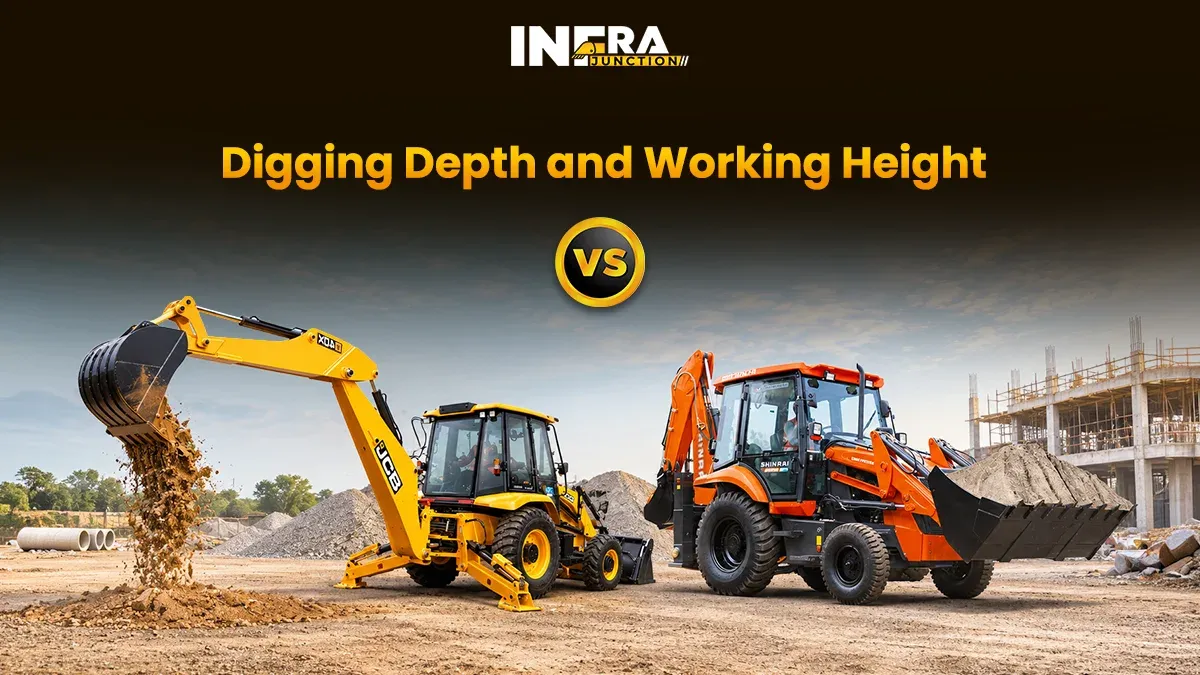
JCB 4DX can dig between 4.95 and 5.36 metres while Shinrai Prime digs up to 4.70 metres. That extra depth can matter when digging deeper drainage trenches, laying underground pipes or making foundations. With JCB, you can reach deeper before needing to change the machine’s position or dig in stages.
Backhoe working height is close, too. CB 4DX reaches 5.69 to 6.25 metres while the Shinrai Prime reaches 6.05 metres. JCB gives more room to lift and place excavated soil. But Shinrai Prime’s working height is still enough for many routine digging and loading jobs.
For loading soil into trucks, the loader load-over height is 3.37 metres on JCB and 3.30 metres on Shinrai Prime. The difference is small, so both can handle common truck-loading work.
Conclusion
JCB 4DX offers larger buckets, higher torque and deeper digging reach. These differences can reduce loading and excavation cycles on projects involving large soil volumes. Tata Hitachi Shinrai Prime costs less and delivers almost equal engine power. Contractors handling frequent bulk loading and deeper excavation can benefit from the JCB's additional capacity. Buyers with smaller project volumes can keep their initial investment lower with the Shinrai Prime.
Frequently Asked Questions
What is the price of JCB 4DX in 2026?
JCB 4DX price ranges from ₹36 lakh to ₹40 lakh. Its higher price comes with features such as a larger front loader bucket, higher torque and greater maximum digging depth than Tata Hitachi Shinrai Prime.
What is the digging depth of Tata Hitachi Shinrai Prime?
Tata Hitachi Shinrai Prime can dig up to 4.70 metres. This depth covers many jobs such as roadside drainage, building foundations and underground pipe trenches.
How much torque does JCB 4DX produce?
JCB 4DX produces 440 Nm of maximum torque. This gives it an advantage when the backhoe bucket digs into hard, packed soil or pulls a full bucket out of a trench. Its peak torque comes at a lower engine speed, which can support digging work without needing to run the engine at high speed.
Is Tata Hitachi Shinrai Prime cheaper than JCB 4DX?
Yes, Tata Hitachi Shinrai Prime costs around ₹33–35 lakh, compared with ₹36–40 lakh for the JCB 4DX. The price difference can reach ₹7 lakh.
What backhoe bucket options are available with Tata Hitachi Shinrai Prime?
Tata Hitachi Shinrai Prime offers six backhoe bucket options, ranging from 0.09 to 0.35 cum. These include standard, heavy-duty, trench and ditch-cleaning buckets.